Brutalism in Belco: A Study
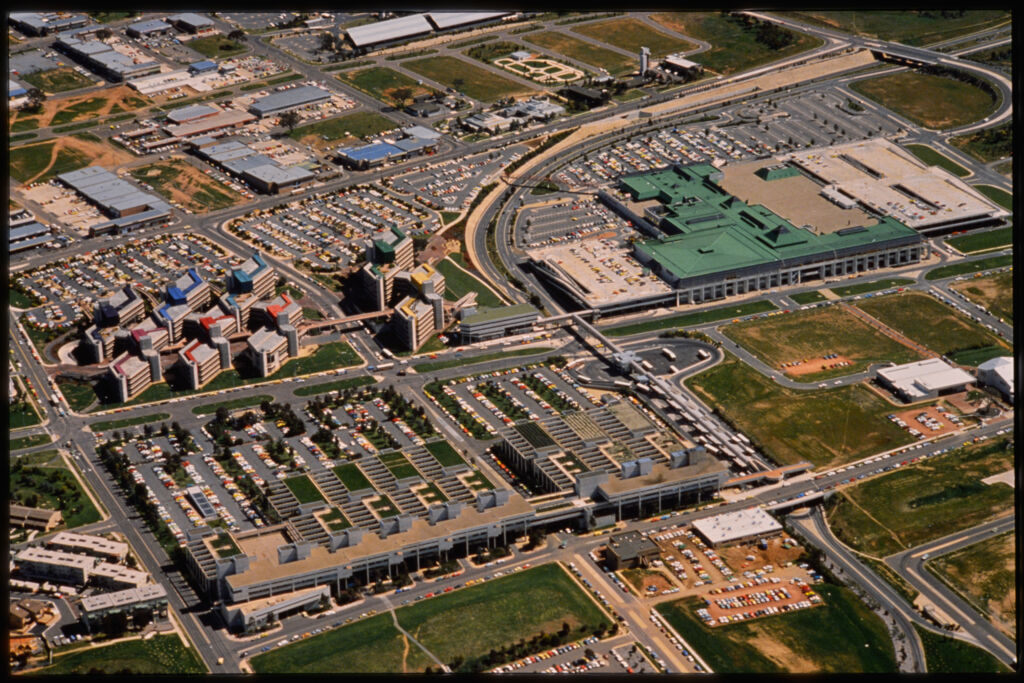
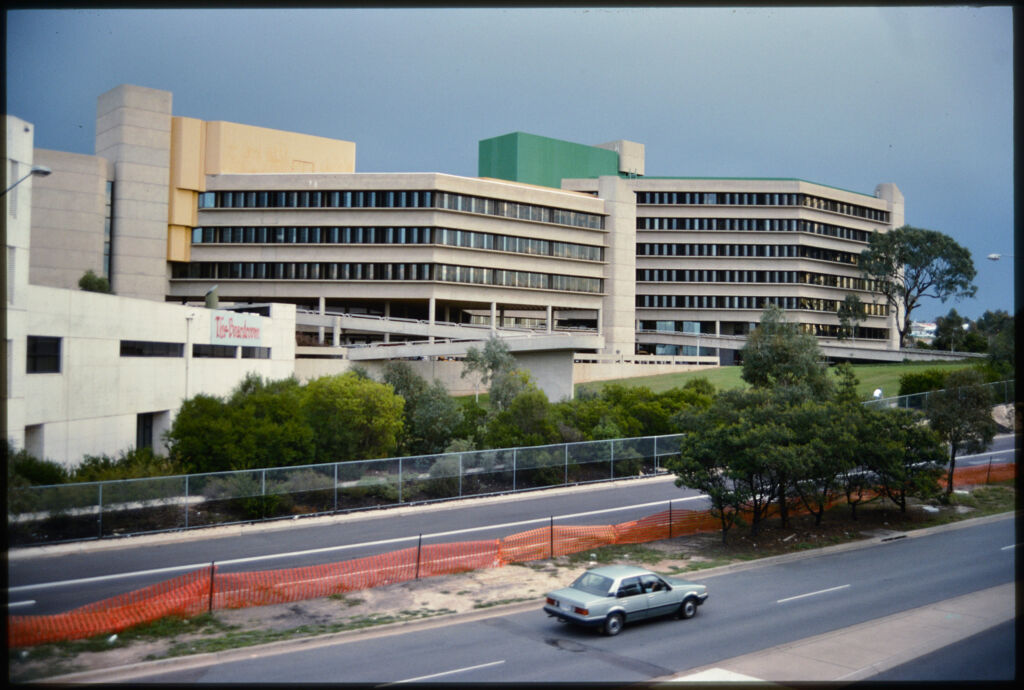
Canberra in the 1980s was a showcase of brutalist architecture, to be found in workplaces, transport hubs and even houses.
The most prominent examples were found in the town centres – Belconnen and Woden in particular.
Today’s focus is on two groups of offices which are mostly no longer with us: Cameron and Benjamin Offices.
These buildings were constructed in the 1970s when the APS needed to get stuff into the ground, and fast. Consequently their shelf lives as active office buildings spanned barely 30 years – but their impact was umistakeable.
Benjamin Offices were built in 1979 whilst the Cameron Offices were built in stages between 1970 and 1976 – at a time where construction was the number one civilian industry in the ACT.
But why did, in the most severe case, the buildings barely last 25 years?
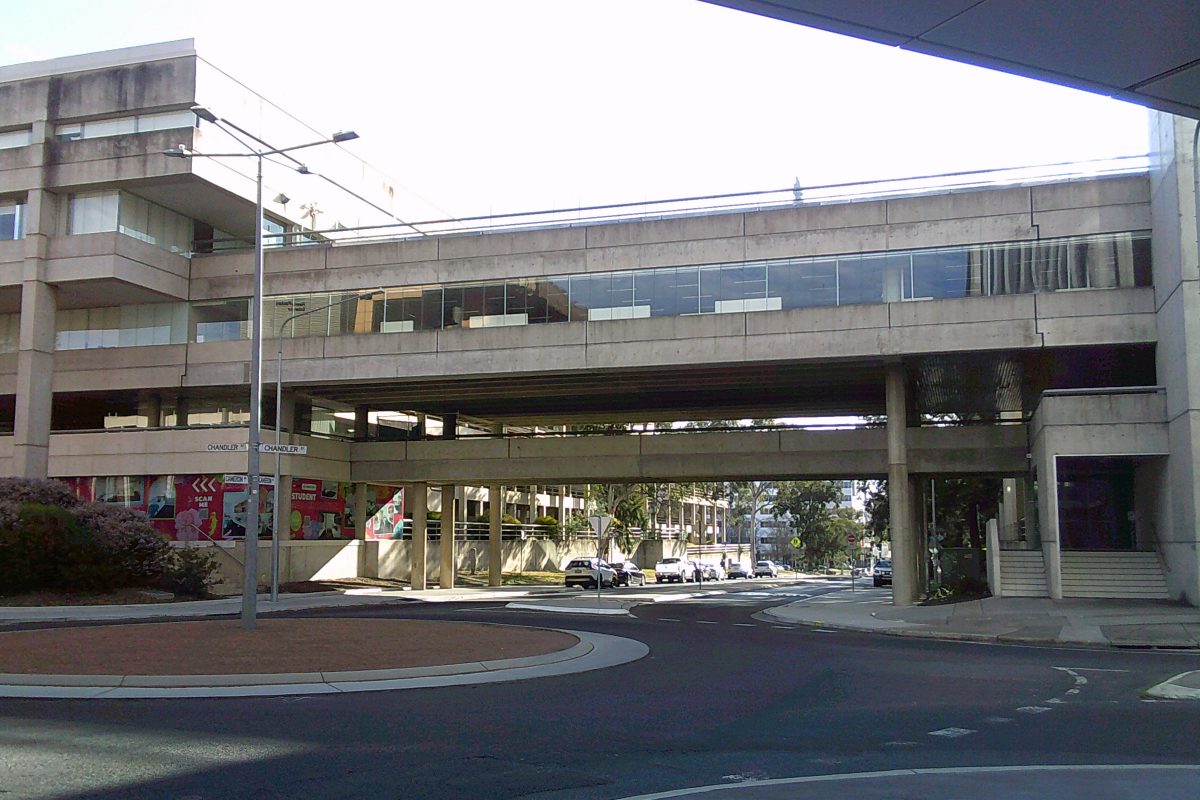
Decentralisation was not a thing back in the 1970s and neither was working from home, so the idea of cramming 2,000 workers into an office complex looked like efficiency especially when a large mall next door was involved. As such, huge pedestrian footbridges from the Belconnen bus interchange linked them to both office complexes and the mall, which in theory was a good idea as they were covered and allowed easy transit in all conditions.
But in practice they were dangerous and crime-ridden, fatally compromising the attraction of public transport and the idea of parking thousands of cars on what became prime land became obvious in the 2000s when demand for other services in town centres (particularly residential accommodation) emerged as Canberra approached 400,000 residents.
As a consequence, the Benjamin Offices have now been demolished and most of the Cameron Offices are also gone – in their case, replaced by attractive apartment buildings on College Street. One original component which uniquely spans over Cameron Avenue is now heritage listed and is currently used for UC student accommodation.